Connect With Us
Blog
Items filtered by date: January 2023
Tuesday, 31 January 2023 00:00
The Side Effects of Wearing Flip Flops

Flip-flops are easy to wear. They are popular shoes to purchase in the summer months for their various colors and the ease of slipping them on to go to the beach. Despite their simplicity, frequently wearing this type of shoe may cause uncomfortable foot problems. The majority of flip-flops do not have an arch, which may lead to heel pain. The toes can also begin to hurt as they are constantly gripping the shoe while walking to keep it on the foot. Additionally, cracked heels can be common among people who wear flip-flops. This can be from the shoe having little or no cushioning and the foot can lose support from the lack of a strap. This may cause the calf muscles to work harder and the foot may strike the ground abnormally. If you would like to learn more about the pros and cons of wearing flip-flops, please consult a podiatrist who can accurately answer any questions you may have.
Flip-flops can cause a lot of problems for your feet. If you have any concerns about your feet or ankles, contact Dr. David Ungar from Personal Foot Care. Our doctor will assist you with all of your foot and ankle needs.
Flip-Flops and Feet
Flip-flops have managed to become a summer essential for a lot of people. While the shoes may be stylish and easy to slip on and off, they can be dangerous to those who wear them too often. These shoes might protect you from fungal infections such as athlete’s foot, but they can also give you foot pain and sprained ankles if you trip while wearing them.
When Are They Okay to Wear?
Flip-flops should only be worn for very short periods of time. They can help protect your feet in places that are crawling with fungi, such as gym locker rooms. Athlete’s foot and plantar warts are two common fungi that flip-flops may help protect your feet against.
Why Are They Bad for My Feet?
These shoes do not offer any arch support, so they are not ideal for everyday use. They also do not provide shock absorption or heel cushioning which can be problematic for your feet. Additionally, you may suffer from glass cuts, puncture wounds, and stubbed toes since they offer little protection for your feet.
More Reasons Why They Are Bad for Your Feet
- They Slow You Down
- May Cause Blisters and Calluses
- Expose Your Feet to Bacteria
If you have any questions, please feel free to contact our office located in Farmington, MI . We offer the newest diagnostic and treatment technologies for all your foot care needs.
Tuesday, 31 January 2023 00:00
The Side Effects of Wearing Flip Flops
Flip-flops are easy to wear. They are popular shoes to purchase in the summer months for their various colors and the ease of slipping them on to go to the beach. Despite their simplicity, frequently wearing this type of shoe may cause uncomfortable foot problems. The majority of flip-flops do not have an arch, which may lead to heel pain. The toes can also begin to hurt as they are constantly gripping the shoe while walking to keep it on the foot. Additionally, cracked heels can be common among people who wear flip-flops. This can be from the shoe having little or no cushioning and the foot can lose support from the lack of a strap. This may cause the calf muscles to work harder and the foot may strike the ground abnormally. If you would like to learn more about the pros and cons of wearing flip-flops, please consult a podiatrist who can accurately answer any questions you may have.
Flip-flops can cause a lot of problems for your feet. If you have any concerns about your feet or ankles, contact Dr. David Ungar from Personal Foot Care. Our doctor will assist you with all of your foot and ankle needs.
Flip-Flops and Feet
Flip-flops have managed to become a summer essential for a lot of people. While the shoes may be stylish and easy to slip on and off, they can be dangerous to those who wear them too often. These shoes might protect you from fungal infections such as athlete’s foot, but they can also give you foot pain and sprained ankles if you trip while wearing them.
When Are They Okay to Wear?
Flip-flops should only be worn for very short periods of time. They can help protect your feet in places that are crawling with fungi, such as gym locker rooms. Athlete’s foot and plantar warts are two common fungi that flip-flops may help protect your feet against.
Why Are They Bad for My Feet?
These shoes do not offer any arch support, so they are not ideal for everyday use. They also do not provide shock absorption or heel cushioning which can be problematic for your feet. Additionally, you may suffer from glass cuts, puncture wounds, and stubbed toes since they offer little protection for your feet.
More Reasons Why They Are Bad for Your Feet
- They Slow You Down
- May Cause Blisters and Calluses
- Expose Your Feet to Bacteria
If you have any questions, please feel free to contact our office located in Farmington, MI . We offer the newest diagnostic and treatment technologies for all your foot care needs.
Tuesday, 31 January 2023 00:00
Flipping Out About Flip Flops
Although it may be tempting to wear flip-flops in warm weather, they are not the best choice of footwear for your feet. Flip-flops may be ideal for the beach, pool, spa, and shared showers, but you should avoid wearing them unless it is completely necessary.
Flip-flops only have a small strip of fabric holding your foot in place, but your toes need a better grip to keep your foot in place. The repetitive gripping can lead to an overuse of your muscles, which could result in tendinitis. This is only one of the many problems that stem from wearing flip-flops too often.
Flip flops aren’t good for extensive walking because they fail to offer arch support, heel cushioning, or shock absorption. As a result, people who wear flip flops are at a higher risk of experiencing an ankle sprain. Additionally, these shoes offer little protection for your feet, putting those who wear them at a greater risk for stubbed toes, glass cuts, and puncture wounds.
Although flip flops aren’t recommended for everyday use by anyone, it is especially important for diabetics to avoid them. A diabetic foot injury can easily become very serious, and it may even lead to amputation.
If you are experiencing pain from wearing flip-flops, you shouldn’t be hesitant to replace them with a more comfortable shoe that offers more support. If your flip-flop foot pain doesn’t go away, you should seek assistance from a podiatrist right away. It is possible that you may have a more serious foot problem such as a stress fracture or arthritis.
Tuesday, 31 January 2023 00:00
Flipping Out About Flip Flops
Although it may be tempting to wear flip-flops in warm weather, they are not the best choice of footwear for your feet. Flip-flops may be ideal for the beach, pool, spa, and shared showers, but you should avoid wearing them unless it is completely necessary.
Flip-flops only have a small strip of fabric holding your foot in place, but your toes need a better grip to keep your foot in place. The repetitive gripping can lead to an overuse of your muscles, which could result in tendinitis. This is only one of the many problems that stem from wearing flip-flops too often.
Flip flops aren’t good for extensive walking because they fail to offer arch support, heel cushioning, or shock absorption. As a result, people who wear flip flops are at a higher risk of experiencing an ankle sprain. Additionally, these shoes offer little protection for your feet, putting those who wear them at a greater risk for stubbed toes, glass cuts, and puncture wounds.
Although flip flops aren’t recommended for everyday use by anyone, it is especially important for diabetics to avoid them. A diabetic foot injury can easily become very serious, and it may even lead to amputation.
If you are experiencing pain from wearing flip-flops, you shouldn’t be hesitant to replace them with a more comfortable shoe that offers more support. If your flip-flop foot pain doesn’t go away, you should seek assistance from a podiatrist right away. It is possible that you may have a more serious foot problem such as a stress fracture or arthritis.
Tuesday, 24 January 2023 00:00
3 Types of Ankle Sprains
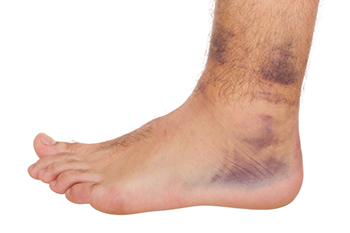
Ankle sprains can vary in severity and type. The most common type of ankle sprain is known as the inversion sprain and happens when the ankle rolls out while the foot turns in. The ligaments can easily be stretched or torn with this type of sprain and are generally painful. The opposite kind of sprain can occur when the ankle rolls inward, as the foot turns outward. The ligaments on the inside of the ankle can become torn with this sprain which is called the eversion sprain. Patients who have experienced a high ankle sprain may endure more discomfort, and this happens when the foot is planted on the ground, and the leg moves toward the inside of the foot. This is considered to be the least common type of sprain and often requires immediate medical attention. If you have sprained your ankle, please visit a podiatrist who can determine which kind of sprain you have, and offer the best treatment advice for you.
Ankle sprains are common but need immediate attention. If you need your feet checked, contact Dr. David Ungar from Personal Foot Care. Our doctor can provide the care you need to keep you pain-free and on your feet.
How Does an Ankle Sprain Occur?
Ankle sprains take place when the ligaments in your ankle are torn or stretched beyond their limits. There are multiple ways that the ankle can become injured, including twisting or rolling over onto your ankle, putting undue stress on it, or causing trauma to the ankle itself.
What Are the Symptoms?
- Mild to moderate bruising
- Limited mobility
- Swelling
- Discoloration of the skin (depending on severity)
Preventing a Sprain
- Wearing appropriate shoes for the occasion
- Stretching before exercises and sports
- Knowing your limits
Treatment of a Sprain
Treatment of a sprain depends on the severity. Many times, people are told to rest and remain off their feet completely, while others are given an air cast. If the sprain is very severe, surgery may be required.
If you have suffered an ankle sprain previously, you may want to consider additional support such as a brace and regular exercises to strengthen the ankle.
If you have any questions please feel free to contact our office located in Farmington, MI . We offer the newest diagnostic and treatment technologies for all your foot and ankle needs.
Tuesday, 24 January 2023 00:00
3 Types of Ankle Sprains
Ankle sprains can vary in severity and type. The most common type of ankle sprain is known as the inversion sprain and happens when the ankle rolls out while the foot turns in. The ligaments can easily be stretched or torn with this type of sprain and are generally painful. The opposite kind of sprain can occur when the ankle rolls inward, as the foot turns outward. The ligaments on the inside of the ankle can become torn with this sprain which is called the eversion sprain. Patients who have experienced a high ankle sprain may endure more discomfort, and this happens when the foot is planted on the ground, and the leg moves toward the inside of the foot. This is considered to be the least common type of sprain and often requires immediate medical attention. If you have sprained your ankle, please visit a podiatrist who can determine which kind of sprain you have, and offer the best treatment advice for you.
Ankle sprains are common but need immediate attention. If you need your feet checked, contact Dr. David Ungar from Personal Foot Care. Our doctor can provide the care you need to keep you pain-free and on your feet.
How Does an Ankle Sprain Occur?
Ankle sprains take place when the ligaments in your ankle are torn or stretched beyond their limits. There are multiple ways that the ankle can become injured, including twisting or rolling over onto your ankle, putting undue stress on it, or causing trauma to the ankle itself.
What Are the Symptoms?
- Mild to moderate bruising
- Limited mobility
- Swelling
- Discoloration of the skin (depending on severity)
Preventing a Sprain
- Wearing appropriate shoes for the occasion
- Stretching before exercises and sports
- Knowing your limits
Treatment of a Sprain
Treatment of a sprain depends on the severity. Many times, people are told to rest and remain off their feet completely, while others are given an air cast. If the sprain is very severe, surgery may be required.
If you have suffered an ankle sprain previously, you may want to consider additional support such as a brace and regular exercises to strengthen the ankle.
If you have any questions please feel free to contact our office located in Farmington, MI . We offer the newest diagnostic and treatment technologies for all your foot and ankle needs.
Tuesday, 24 January 2023 00:00
Three Grades of Ankle Sprains
An ankle sprain occurs when one or more ankle ligament gets overly stretched. Ligaments are strong bands of tissue that bind and support the bones and other structures that make up the ankle. In more severe ankle sprains, the ligament(s) tear—either partially or completely—and there may be an audible popping noise at the moment of injury.
Ankle sprains are quite common and can occur when the ankle rolls outwardly (eversion) or inwardly (inversion), causing the ligament(s) to stretch beyond normal limits, or even tear. Falls, twists, or blows to the ankle during sports or other activities can cause this injury, as well as wearing improper footwear, running on uneven surfaces, or having weak ankles.
Depending on the injury’s severity, an ankle sprain will be classified as Grade I, Grade II, or Grade III. Grade I sprains involve ligament(s) being overly stretched but not torn, with symptoms of mild pain, swelling, and ankle instability. There may also be some difficulty bearing weight. A Grade II sprain usually involves a partial tear of the ligament which brings more intensity in these symptoms, along with possible bruising. With a Grade III sprain, the ligament is completely torn, the symptoms are severe, and it may not be possible to put weight on the affected foot at all.
To diagnose and grade an ankle sprain, a podiatrist will perform a physical examination, checking for tenderness and range of motion in the ankle. For more severe sprains, X-rays or other imaging studies may be necessary.
It is vitally important to have an ankle sprain treated properly as improper healing often leads to future ankle sprains and possibly even chronic ankle stability. Treatment for an ankle sprain will vary, depending on its severity, and may include the RICE method (Rest/Ice/Compression/Elevation), physical therapy, bracing, medications, and possibly even surgery to repair a torn ligament. Rehabilitation is very important for the sprain to heal properly and to restore functionality.
Tuesday, 24 January 2023 00:00
Three Grades of Ankle Sprains
An ankle sprain occurs when one or more ankle ligament gets overly stretched. Ligaments are strong bands of tissue that bind and support the bones and other structures that make up the ankle. In more severe ankle sprains, the ligament(s) tear—either partially or completely—and there may be an audible popping noise at the moment of injury.
Ankle sprains are quite common and can occur when the ankle rolls outwardly (eversion) or inwardly (inversion), causing the ligament(s) to stretch beyond normal limits, or even tear. Falls, twists, or blows to the ankle during sports or other activities can cause this injury, as well as wearing improper footwear, running on uneven surfaces, or having weak ankles.
Depending on the injury’s severity, an ankle sprain will be classified as Grade I, Grade II, or Grade III. Grade I sprains involve ligament(s) being overly stretched but not torn, with symptoms of mild pain, swelling, and ankle instability. There may also be some difficulty bearing weight. A Grade II sprain usually involves a partial tear of the ligament which brings more intensity in these symptoms, along with possible bruising. With a Grade III sprain, the ligament is completely torn, the symptoms are severe, and it may not be possible to put weight on the affected foot at all.
To diagnose and grade an ankle sprain, a podiatrist will perform a physical examination, checking for tenderness and range of motion in the ankle. For more severe sprains, X-rays or other imaging studies may be necessary.
It is vitally important to have an ankle sprain treated properly as improper healing often leads to future ankle sprains and possibly even chronic ankle stability. Treatment for an ankle sprain will vary, depending on its severity, and may include the RICE method (Rest/Ice/Compression/Elevation), physical therapy, bracing, medications, and possibly even surgery to repair a torn ligament. Rehabilitation is very important for the sprain to heal properly and to restore functionality.
Tuesday, 17 January 2023 00:00
Types of Insoles

Foot pain can be caused for a variety of reasons, but ill-fitting shoes are the biggest culprit. And if shoe fit is the reason for foot pain, insoles can be the first line of defense. Insoles are the soft cushions that fit inside most shoes. They work as shock absorbers for the feet. If one wears the same shoe every day, the insoles can start to break down and may need to be replaced. There are different insoles for different needs. An insert, insole, and orthotic are often terms that are used interchangeably, however, they are different. An insert is a thin piece of shoe padding or gel cushion that is placed in shoes to provide relief to pain in heels, arches, and forefeet. They are used for shock absorption, cushioning against pressure, and keeping the feet supported while walking. Insoles are general-purpose, off-the-shelf overlays for shoes that are made of foam. Orthotics are customized inserts that are used to control movement in the feet and legs. They are typically made to order. Visiting a podiatrist is suggested for the proper determination of the best type of insole for your foot discomfort.
Foot Pain
Foot pain can be extremely painful and debilitating. If you have a foot pain, consult with Dr. David Ungar from Personal Foot Care. Our doctor will assess your condition and provide you with quality foot and ankle treatment.
Causes
Foot pain is a very broad condition that could be caused by one or more ailments. The most common include:
- Bunions
- Hammertoes
- Plantar Fasciitis
- Bone Spurs
- Corns
- Tarsal Tunnel Syndrome
- Ingrown Toenails
- Arthritis (such as Gout, Rheumatoid, and Osteoarthritis)
- Flat Feet
- Injury (from stress fractures, broken toe, foot, ankle, Achilles tendon ruptures, and sprains)
- And more
Diagnosis
To figure out the cause of foot pain, podiatrists utilize several different methods. This can range from simple visual inspections and sensation tests to X-rays and MRI scans. Prior medical history, family medical history, and any recent physical traumatic events will all be taken into consideration for a proper diagnosis.
Treatment
Treatment depends upon the cause of the foot pain. Whether it is resting, staying off the foot, or having surgery; podiatrists have a number of treatment options available for foot pain.
If you have any questions, please feel free to contact our office located in Farmington, MI . We offer the newest diagnostic and treatment technologies for all your foot care needs.
Tuesday, 17 January 2023 00:00
Types of Insoles
Foot pain can be caused for a variety of reasons, but ill-fitting shoes are the biggest culprit. And if shoe fit is the reason for foot pain, insoles can be the first line of defense. Insoles are the soft cushions that fit inside most shoes. They work as shock absorbers for the feet. If one wears the same shoe every day, the insoles can start to break down and may need to be replaced. There are different insoles for different needs. An insert, insole, and orthotic are often terms that are used interchangeably, however, they are different. An insert is a thin piece of shoe padding or gel cushion that is placed in shoes to provide relief to pain in heels, arches, and forefeet. They are used for shock absorption, cushioning against pressure, and keeping the feet supported while walking. Insoles are general-purpose, off-the-shelf overlays for shoes that are made of foam. Orthotics are customized inserts that are used to control movement in the feet and legs. They are typically made to order. Visiting a podiatrist is suggested for the proper determination of the best type of insole for your foot discomfort.
Foot Pain
Foot pain can be extremely painful and debilitating. If you have a foot pain, consult with Dr. David Ungar from Personal Foot Care. Our doctor will assess your condition and provide you with quality foot and ankle treatment.
Causes
Foot pain is a very broad condition that could be caused by one or more ailments. The most common include:
- Bunions
- Hammertoes
- Plantar Fasciitis
- Bone Spurs
- Corns
- Tarsal Tunnel Syndrome
- Ingrown Toenails
- Arthritis (such as Gout, Rheumatoid, and Osteoarthritis)
- Flat Feet
- Injury (from stress fractures, broken toe, foot, ankle, Achilles tendon ruptures, and sprains)
- And more
Diagnosis
To figure out the cause of foot pain, podiatrists utilize several different methods. This can range from simple visual inspections and sensation tests to X-rays and MRI scans. Prior medical history, family medical history, and any recent physical traumatic events will all be taken into consideration for a proper diagnosis.
Treatment
Treatment depends upon the cause of the foot pain. Whether it is resting, staying off the foot, or having surgery; podiatrists have a number of treatment options available for foot pain.
If you have any questions, please feel free to contact our office located in Farmington, MI . We offer the newest diagnostic and treatment technologies for all your foot care needs.

